

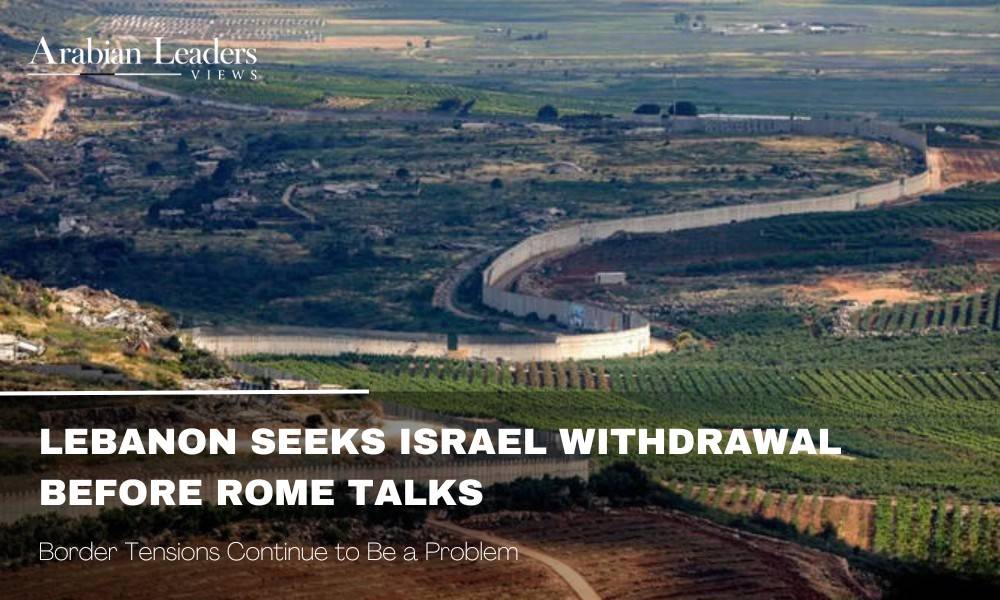
Lebanon has declared that it will only take part in the diplomatic negotiations that are scheduled to take place in Rome if Israel leaves two “pilot” zones along the border. Diplomatic sources claim that the need underscores Lebanon’s stance that before talks proceed, tangible actions on the ground should be taken.
The planned conference in Rome is a component of larger international initiatives to ease tensions, enhance regional stability, and promote communication between the two adjacent nations. According to officials, maintaining long-term stability and averting any escalation still require diplomatic involvement.
Lebanon Establishes Requirements for Rome Talks
Lebanese officials have said unequivocally that Israel’s removal from the two designated regions is a prerequisite for participation in the Rome talks. The government thinks that doing so will foster trust and improve the atmosphere for talks.
In order to ascertain whether the requirements can be fulfilled prior to the planned negotiations, diplomatic representatives are still in contact with international mediators.
“تؤكد الحكومة اللبنانية أن أي تقدم في المفاوضات يجب أن يسبقه تنفيذ خطوات عملية على الأرض، بما يسهم في تعزيز الثقة وتهيئة الظروف المناسبة للحوار.”
Continued International Mediation
Instead of escalating hostilities, a number of international partners are urging both parties to seek diplomatic solutions. Rome has been chosen as the meeting place because it offers an impartial environment for discussion.
The meeting is expected to cover humanitarian issues, border security, regional stability, and efforts to foster confidence.
“تسعى الجهود الدبلوماسية إلى خفض التوتر وتشجيع جميع الأطراف على مواصلة الحوار بما يخدم الأمن والاستقرار في المنطقة.”
Border Tensions Continue to Be a Problem
Over the years, there have been several instances of tension along the border between Israel and Lebanon. Attempts to establish long-lasting accords have been hampered by political disputes, military activities, and security concerns.
The most recent diplomatic effort is part of ongoing efforts to use diplomacy rather than conflict to stop future escalation.
Both governments continue to respond to international diplomatic efforts while maintaining a focus on safeguarding national interests.
Impact of the Talks on the Region
The Rome meeting’s conclusion may have an impact on the Middle East’s overall stability. International organizations and neighboring nations are keeping a careful eye on events since any easing of hostilities might promote regional cooperation.
Successful negotiations, according to observers, would promote more diplomatic involvement on other unsolved regional concerns.
For all parties concerned, border security, humanitarian situations, and economic stability continue to be top considerations.
The goal of diplomatic efforts is to boost confidence.
In order to lessen mistrust between opposing sides, diplomatic conversations frequently start with steps aimed at fostering confidence.
It is believed that Lebanon’s proposal for Israel to leave the two regions is an attempt to create an environment conducive to substantive communication.
International mediators are still collaborating with both governments to promote concrete actions that could foster a positive environment in upcoming talks.
“الحوار يبقى الوسيلة الأفضل لمعالجة الخلافات وتحقيق الاستقرار من خلال الحلول السلمية والتفاهم المشترك.”
Attention to the Negotiations Worldwide
Because regional stability has broader consequences for global security and economic activity, governments worldwide continue to keep an eye on developments between Lebanon and Israel.
The enduring importance of international cooperation in tackling difficult political issues is demonstrated by diplomatic initiatives like the planned Rome conference.
Analysts point out that maintaining open lines of communication between all sides is crucial to lowering uncertainty and bolstering sustained peace initiatives.
The Way Forward for Further Discussion
The significance of confidence-building strategies in international diplomacy is demonstrated by Lebanon’s choice to tie its involvement in the Rome negotiations to Israel’s withdrawal from the designated territories. Both regional and international players continue to urge peaceful engagement, even though negotiations are still subject to ongoing debates.
As diplomatic efforts proceed, the emphasis will continue to be on promoting communication, lowering tensions, and identifying workable solutions that enhance regional stability. Opportunities for future talks and enduring peace may arise if all sides continue to work together.