
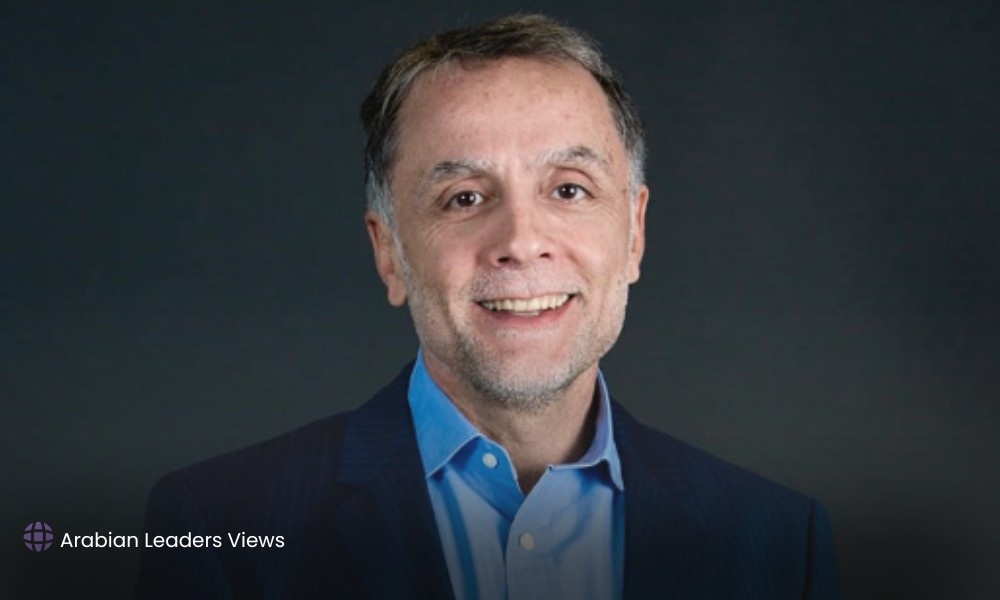
Fadi Ghandour, the creator of Aramex and Executive Chairman of Wamda Capital, feels that the discussion is now about more than just technology as global investment in AI continues to soar. Rather, he contends that large-scale capital, strategic investment, and sophisticated infrastructure are becoming a defining factor in global power. Fadi Ghandour asserts that countries and businesses in charge of these resources will be crucial in determining the direction of future economic expansion, innovation, and global competitiveness.
His comments are made at a time when governments and multinational IT firms are spending billions of dollars on semiconductor technologies, cloud computing, data centers, and AI infrastructure. Both business and the distribution of power among areas are changing as a result of these investments.
The World is Changing Due to AI Infrastructure
According to Ghandour, artificial intelligence infrastructure has developed into a vital national resource. It takes substantial financial resources, specialized technology, and long-term planning to build modern computing facilities. Because of this, only a few number of nations and businesses are now able to create AI systems on a worldwide scale.
He contends that a new kind of influence is emerging as a result of this resource concentration, one in which technological leadership is becoming more closely associated with economic power and geopolitical stance. Infrastructure access is becoming as crucial as talent and innovation access.
The Use of Capital as a Competitive Advantage
Ghandour also emphasizes the increasing significance of investment capital as a major theme. AI development and digital infrastructure are receiving previously unheard-of levels of finance from global technology companies, institutional investors, and sovereign wealth funds.
He claims that capital now dictates where innovation takes place, which firms get funding, and the speed at which cutting-edge technology transition from research to commercial use. He views technology and finance collaborating to influence future markets and industries rather than seeing them as distinct fields.
The Middle East’s Repercussions
Through economic diversification, digital change, and startup investment, the Middle East has significantly strengthened its technology ecosystem. But in order to be competitive, Ghandour thinks the area needs to keep developing its own capacity for innovation.
He advocates for increased funding for regional businesses, academic institutions, and technological infrastructure. According to him, developing regional expertise would help guarantee that Middle Eastern businesses become technology developers rather than just consumers of goods made elsewhere.
The Innovative Legacy of Aramex
Ghandour’s longstanding dedication to entrepreneurship is reflected in the conversation. In 1982, he was one of the founders of Aramex, a multinational logistics company that became one of the most prosperous economic ventures in the Middle East. Over the years, Aramex showed how local businesses could compete globally by embracing innovation, strategically growing, and adjusting to shifting consumer needs.
Ghandour continues to assist startups in the Middle East and North Africa today by investing in entrepreneurs creating solutions in the fields of technology, banking, healthcare, and logistics through Wamda Capital.
AI Infrastructure’s Future and Its Impact on the World
According to Ghandour, the intimate connection between infrastructure, investment, and technology will determine the future of global dominance. Artificial intelligence is evolving from a corporate opportunity to a strategic resource that affects international collaborations, economic resilience, and innovative capacity.
Countries that invest in talent, infrastructure, and long-term innovation ecosystems will probably be better positioned for future prosperity as nations compete to enhance their AI capabilities. Ghandour’s viewpoint emphasizes that creating the institutional and financial underpinnings necessary to sustain technical leadership is just as important as creating new technologies.
Subscribe now to receive the latest startup, technology, and leadership news