
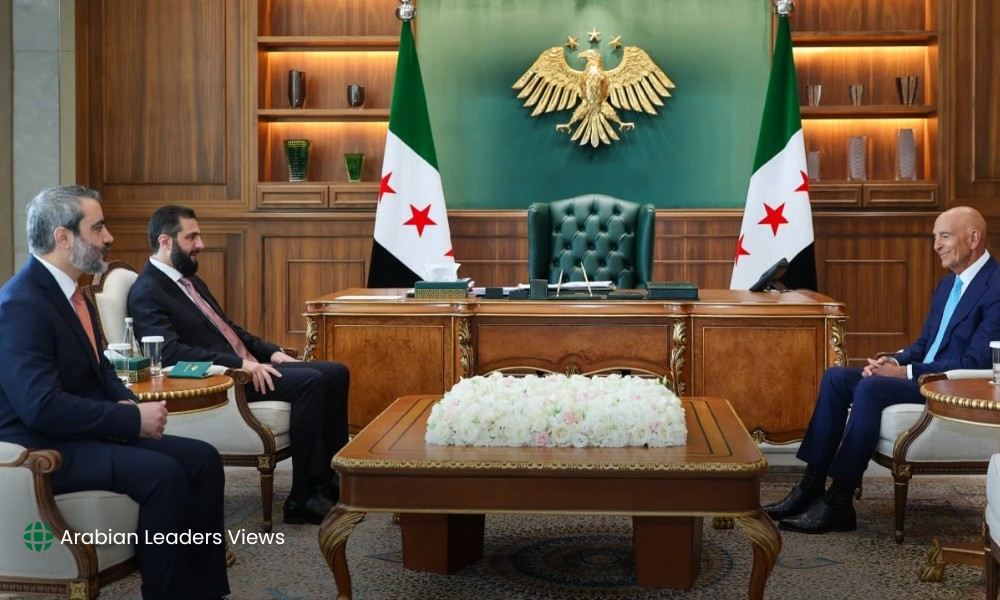
The United States has reaffirmed its commitment to cooperation with Syria following a meeting between US special presidential envoy Tom Barrack and Syrian President Ahmad al-Sharaa in Damascus. The discussions, held on October 21, 2026, focused on shared interests, regional developments, and efforts to strengthen security and stability across the Middle East. Syrian Foreign Minister Asaad Hassan al-Shaibani also attended the meeting.
The talks come as Washington and Damascus continue exploring areas of cooperation following major political changes in Syria. Both sides have expressed interest in coordinating on issues that affect their countries and the wider region.
US Syria Envoy Meets Syrian President in Damascus
Tom Barrack, the US special presidential envoy for Syria and Iraq, met al-Sharaa at the People’s Palace in Damascus. According to the Syrian presidency, the meeting covered regional developments and opportunities for cooperation on matters of mutual interest.
The discussions also highlighted the importance of improving coordination to support regional security. However, officials did not publicly disclose a detailed agenda or announce a specific agreement following the meeting.
Barrack described the talks as productive and constructive, emphasizing Syria’s role in efforts to promote stability across the Middle East.
The meeting represents another step in ongoing US Syria relations as both governments consider ways to address shared security and political challenges.
Washington Says It Will Maintain Its Regional Engagement
A day before the Damascus meeting, Barrack said the United States was not withdrawing from the Middle East. Speaking at the Global Security Forum in Doha, he encouraged countries in the region to take greater responsibility for their own security.
His remarks reflected Washington’s approach of maintaining relationships with regional partners while reducing its direct involvement in certain conflicts.
The United States has worked with different partners in Syria over the years, including local forces involved in the campaign against Daesh. Its current engagement also includes discussions with the Syrian leadership about security, cooperation, and the country’s political transition.
These developments are part of a broader shift in US Syria relations following the changes in Syria’s leadership.
Regional Security Remains a Key Priority
Syria’s location makes it an important part of wider Middle Eastern security discussions. Developments within the country can affect neighboring states, border security, regional diplomacy, and efforts to counter extremist groups.
The latest talks suggest that Washington and Damascus are continuing dialogue on issues where their interests may overlap. Nevertheless, important questions remain about how cooperation will develop and which specific commitments both governments may pursue.
The discussions also take place against a wider diplomatic backdrop involving Lebanon and other regional partners. US envoy activities in Lebanon have included separate diplomatic efforts focused on de-escalation. These discussions should not be confused with the latest meeting in Damascus.
What the Talks Could Mean for US Syria Relations
Continued communication between Washington and Damascus could create opportunities to discuss security concerns, economic recovery, and regional stability. Progress will depend on future negotiations, practical cooperation, and the ability of both governments to address outstanding differences.
The meeting does not, by itself, confirm a new security agreement or a change in US military policy. Officials have so far provided only a general description of the subjects discussed.
For now, the encounter signals that diplomatic engagement between the two sides remains active as Syria navigates its political transition and regional challenges.
Continued Dialogue Shapes the Next Phase
The meeting between Barrack and al-Sharaa highlights the continuing importance of diplomatic communication between the United States and Syria. Both sides have identified cooperation and regional stability as areas of shared interest, although further details about future steps remain limited.
Upcoming discussions and official announcements will help clarify how this engagement develops and whether it leads to concrete agreements on security and broader bilateral relations.
Arabian Leaders Views Magazine showcases the inspiring journeys of visionary leaders, entrepreneurs, and industry pioneers across the Arab world.