

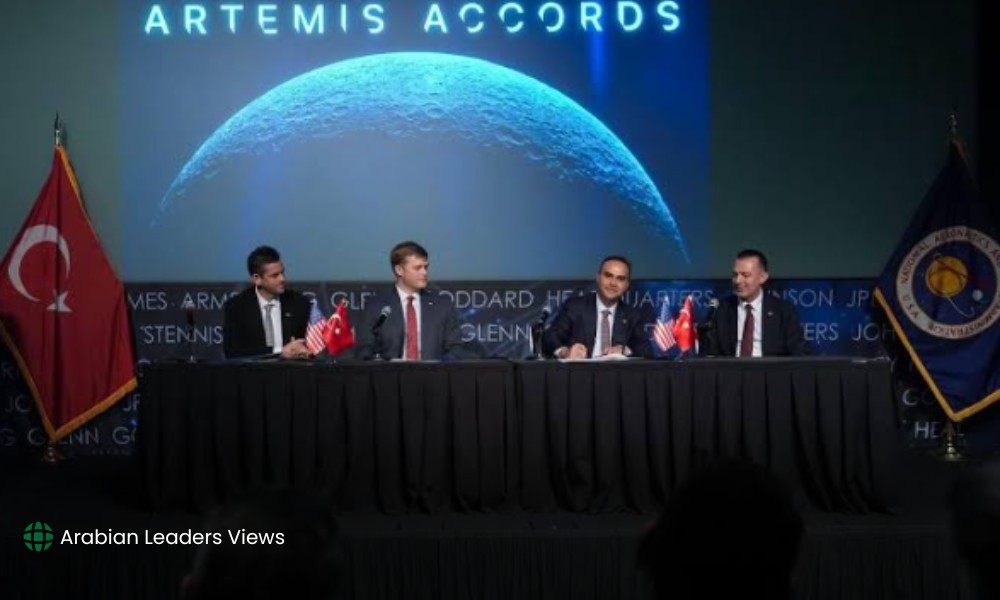
By joining the Artemis Accords, Turkey has made a significant contribution to bolstering its position in the international space community. The action puts the nation in the company of nations collaborating to promote responsible, transparent, and peaceful extraterrestrial exploration.
The establishment of the Artemis Accords demonstrates Turkey’s increasing interest in international collaboration and space exploration. By adopting the pact, Türkiye expresses its intention to contribute to future space missions while engaging with other countries on shared principles for exploring the Moon and beyond.
The Artemis Accords: What Are They?
A set of guidelines for collaboration in space exploration is known as the Artemis Accords. They are in favour of nonviolent endeavours, scientific advancement, openness, emergency support, and the prudent use of space resources.
NASA’s Artemis program, which intends to return humans to the Moon and lay the groundwork for future exploration, including missions deeper into the solar system, is directly linked to this agreement.
The Artemis Accords offer a framework for nations to cooperate while upholding peaceful and responsible space practices, as opposed to being a typical Artemis treaty.
Turkey Expands Its Role in International Space
Turkey’s broader aspirations in the space industry are reflected in its decision to sign the agreements. The nation has been working to strengthen its space capabilities domestically and seeking ways to broaden its overseas alliances.
Turkish academics, engineers, academic institutions, and space organisations may be able to participate in global projects and scientific endeavours thanks to the Artemis Turkey collaboration.
Participation also gives Turkey a chance to exchange knowledge and participate in conversations that will influence lunar exploration in the future.
An Expanded International Space Collaboration
The increasing number of nations signing the Artemis Accords demonstrates how crucial international collaboration is to space research. Countries are concentrating on shared values that can facilitate long-term exploration rather than just individual expeditions.
The wider European and global interest in the deal is also reflected in the search activity surrounding the Artemis Accords in Bulgaria and the Netherlands. Various nations are evaluating how involvement will benefit their own space businesses, research communities, and global linkages.
The move shows Turkey’s determination to take part in significant international exploration projects and gives its international space partnerships a new dimension.
What This Signifies for the Future of Turkey
The signing may create new opportunities for cooperation in fields like knowledge sharing, technology development, scientific research, and lunar exploration. Additionally, it might strengthen ties between Turkish institutions and organisations engaged in global space initiatives.
The decision is about more than just entering an international framework, according to a thorough Turkish analysis of the development. It symbolises Turkey’s attempt to have a bigger impact in an area that is growing more crucial to research, technology, and international collaboration.
What the Artemis Accords Mean for Türkiye
An important turning point in Turkey’s space aspirations was reached with the signing of the Artemis Accords. International collaborations will be crucial in determining future missions as lunar exploration enters a new stage.
By taking part, Turkey can enhance international cooperation, support peaceful space exploration, and create new prospects for its expanding space industry. Thus, the Artemis Accords could be a significant step toward Turkey’s long-term goal of becoming a more active member in international space exploration.
Arabian Leaders Views Magazine showcases the inspiring journeys of visionary leaders, entrepreneurs, and industry pioneers across the Arab world.