

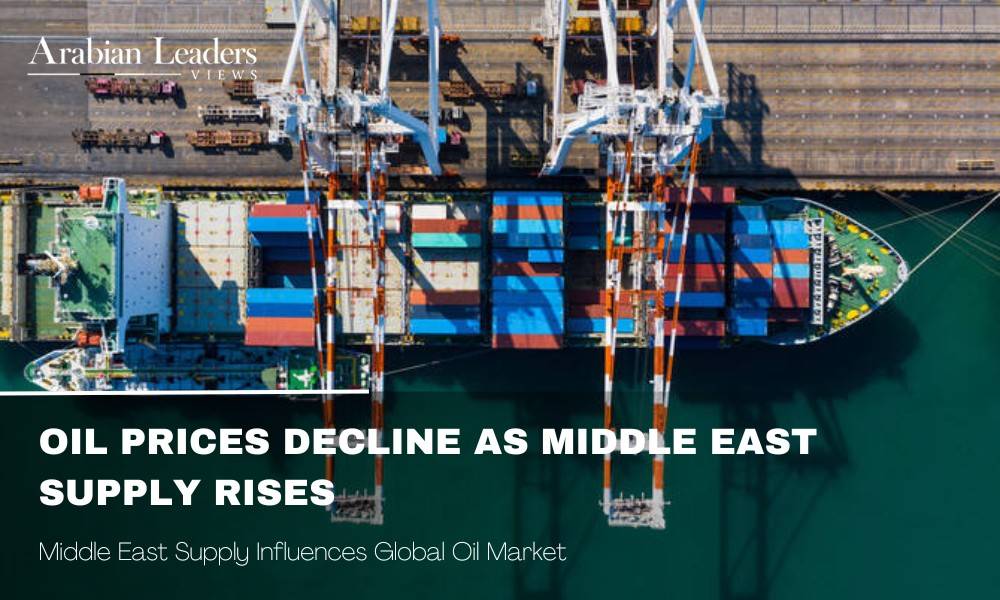
As worries about possible shortages in the energy market subsided due to increased crude supplies from the Middle East, global oil prices decreased. Although the region’s geopolitical concerns continue to garner attention, improved supply and increased output have helped stabilize market sentiment.
Investors are nonetheless wary of gasoline demand and the expansion of the world economy. Despite continued improvements in important oil-producing regions, oil prices are under pressure to decline due to a mix of increased supply and uncertain demand.
Middle East Supply Influences Global Oil Market
The Middle East continues to be one of the world’s top producers of oil, therefore its output levels play a significant role in the world’s energy markets. Oil production has recently increased, improving supply availability and lowering concerns about shortages in the near future.
Even while geopolitical threats frequently make headlines, markets are now giving real output levels and export flows more weight. Moving Oil suppliers have responded.
This trend is a reflection of the production.
Prices Are Still Affected by Demand Issues
The uncertainty surrounding the demand for fuel worldwide is one of the main causes of the current price fall.
Market attitude is still influenced by a number of factors:
- Some regions have slower economic growth.
- Uncertainty in industrial activity
- Modifying patterns of fuel usage
- Variations in seasonal demand
Expectations of a steady supply of steady supply of steady supply of steady supply of steady oil
Because traders are more concerned with consumption patterns than supply disruptions, demand worries surpass supply concerns in the Middle East, resulting in a decline in oil prices.
Growth in Supply Offsets Geopolitical Risks
In the past, Middle East Oil output. Nonetheless, the current supply supply levels of current supply have contributed to the current supply.
Energy analysts point out that consistent production has given assurance that the world’s supply is still adequate to satisfy present demand, even though tensions are still part of the market picture.
Significant price surges in recent trading sessions have been avoided because to this balance.
Decisions Made by OPEC+ Continue to Be a Major Market Driver
Investors also keep a close eye on OPEC+’s production strategy.
Changes in the production market expectations in the market expectations in the market expectations. Uncertainty regarding OPEC+ cuts and tensions in the Middle East caused oil prices to climb in prior months as traders expected potential reductions in global supply.
Oil prices may be directly impacted by any future decisions about output adjustments. Market Market Supply .
What Could Influence Influence Influence Influence Influence Influence Influence Influence Next?
In the upcoming weeks, a number of events could influence the direction of oil prices.
Important market variables consist of:
- OPEC+ production choices
- Performance of the world economy
- Fuel Fuel Demand Demand Trends
- Geopolitical developments in the Middle East
- Interest rate policies and inflation
Crude Crude inventory inventory inventory inventory inventory inventory levels
Prices may rise if output stays steady and demand increases. However, prices might continue to be under pressure if supply keeps growing more quickly than demand.
Demand Supply Supply
The equilibrium between supply and demand affects oil markets continuously.
Production Concerns Concerns Concerns Concerns Concerns Concerns Concerns Concerns Concerns Concerns Concerns Concerns Concerns Concerns Concerns Concerns Concerns Concerns. Similarly, if traders anticipate future shortages, oil prices increase as supply worries surpass demand concerns.
But as of right now, increased production has allayed those worries. The likelihood of sudden shortages has decreased due to the availability of supply, making demand predictions the main factor influencing prices.
The market outlook is still being closely monitored
While demand is still unpredictable, global supply circumstances are improving, and energy markets are continuing to adapt. The Middle Oil market.
Investors will keep an eye on key oil-producing countries’ policy moves, supply levels, and demand projections. These variables will influence whether oil prices stabilize, rise, or continue to be under pressure in the coming months.